General Biology
E-Portfolio
Shane Tiffany L. Cadavida 12B-STEM
[email protected]
TABLE OF CONTENTS:• Individual vs. Evolutionary Adaptation
• Statements of Cell Theory
• Difference between Eukaryotic & Prokaryotic cells
• Eukaryotic & Prokaryotic cells
• Types of Stem Cells
• Cell Differentiation
• Cell Transport
• Non-Disjunction
• Review Session
TEAM A:• Cadavida, Shane Tiffany L.
• Cangayda, Alieyah Romelle
• Gonzales, Raven G.
• Sabate, Maria Crystalline V.
• Omisol, Lindsay Michaellah P.
• Penaflor, Rafael Jiro I.
•Luat, Mark Thimotee B.
• Jaylo, Ysabella Reese D.
• Suanino, Kathleen Denise M.
• Rosales, Leenard D.
Presentations
Overview of Individual vs. Evolutionary AdaptationIn the study of biological adaptations, it is essential to differentiate between individual and evolutionary adaptations. Individual adaptations refer to the physiological or behavioral changes that occur within an organism in response to environmental pressures. These adaptations manifest in relatively short time frames and are not genetically inherited, meaning they do not affect the organism's offspring. In contrast, evolutionary adaptations involve long-term genetic changes within populations, driven by natural selection, where beneficial traits are passed down through generations. Understanding these two forms of adaptation is crucial for grasping how organisms interact with their environments and evolve over time.WEEK 2 - DAY 1INDIVIDUAL VS. EVOLUTIONARY ADAPTATIONThis lesson explores the distinctions between individual and evolutionary adaptations. Key concepts include:• Individual Adaptation: These adjustments occur within an organism's lifetime and can include changes in behavior or physiology. Such adaptations are immediate responses to environmental stimuli and are not genetically transmitted.• Evolutionary Adaptation: This process involves gradual genetic changes across populations, resulting from natural selection. Adaptations in this context are inheritable traits that enhance survival and reproductive success over generations.SUBMITTED ON SEPTEMBER 3, 2024
WEEK 2 - DAY 2THREE THEORIES OF CELLS• Cell Theory: The foundational principles of biology underscore that cells are the basic unit of structure and function in all living organisms, which supports the mechanisms behind adaptation at both individual and evolutionary levels.SUBMITTED ON SEPTEMBER 4, 2024
Learning OutcomesBy the end of this lesson, I was able to:1. Differentiate between individual and evolutionary adaptations in biological contexts.
2. Understand the mechanisms driving physiological and behavioral changes in organisms.
3. Analyze how genetic changes influence population dynamics and evolutionary processes.
4. Apply the principles of cell theory to comprehend the structural and functional aspects of adaptations in living organisms.
Overview of Eukaryotic and Prokaryotic CellsWEEK 3 - DAY 1Cells are the fundamental units of life, and understanding their classification is essential in biology. Cells are broadly categorized into two types: eukaryotic and prokaryotic. Eukaryotic cells are characterized by their complex structure, including membrane-bound organelles and a defined nucleus, which houses the cell's genetic material. In contrast, prokaryotic cells are simpler, lacking a nucleus and membrane-bound organelles, with their genetic material dispersed throughout the cell. This lesson will explore the distinctions between these two cell types, their structures, and examples of each.SUBMITTED ON SEPTERMBER 10, 2024
WEEK 3 - DAY 2This lesson covers the following key concepts:• Eukaryotic Cells - These cells are typically larger and more complex than prokaryotic cells. They possess a true nucleus, organelles such as mitochondria and endoplasmic reticulum, and can be unicellular or multicellular. Common examples include plant cells, animal cells, and fungi.• Prokaryotic Cells - are generally smaller and simpler. They lack a nucleus and organelles, with genetic material located in the nucleoid region. They are primarily unicellular and include bacteria and archaea.SUBMITTED ON SEPTEMBER 11, 2024Learning OutcomesBy the end of this lesson, I was able to:1. Differentiate between eukaryotic and prokaryotic cells based on structure and function.
2. Identify key features of eukaryotic cells, including organelles and the nucleus.
3. Recognize the characteristics of prokaryotic cells, including their simplicity and genetic organization.
4. Provide examples of eukaryotic and prokaryotic organisms and explain their relevance in biological systems.
Overview of Different Types of Stem Cells and Cell DifferentiationStem cells are unique cells with the remarkable ability to develop into various cell types in the body. They play a crucial role in growth, development, and tissue repair. Understanding the different types of stem cells and the process of cell differentiation is vital in fields such as regenerative medicine and developmental biology. This lesson will examine the classifications of stem cells and the mechanisms through which they differentiate into specialized cell types.WEEK 4 - DAY 1This lesson focuses on the following key concepts:Types of Stem Cells:• Embryonic Stem Cells (ESCs): Pluripotent cells derived from early-stage embryos. They can give rise to nearly all cell types in the body, making them a valuable resource for research and therapeutic applications.• Adult Stem Cells (ASCs): Also known as somatic or tissue-specific stem cells, these are multipotent cells found in various tissues. They primarily function in tissue maintenance and repair. Examples include hematopoietic stem cells (which differentiate into blood cells) and mesenchymal stem cells (which can develop into bone, cartilage, and fat cells).• Induced Pluripotent Stem Cells (iPSCs): These are adult cells reprogrammed to an embryonic stem cell-like state, allowing them to differentiate into various cell types. iPSCs offer significant potential for personalized medicine and disease modeling.SUBMITTED ON SEPTEMBER 17, 2024
WEEK 4 - DAY 2• Cell Differentiation: This process refers to the transformation of unspecialized stem cells into specialized cells with distinct functions. Differentiation is influenced by various factors, including:• Gene Expression: Specific genes are activated or suppressed, guiding the cell's development pathway.• Signaling Molecules: Growth factors and cytokines from the surrounding environment influence differentiation.• Cellular Microenvironment: The physical and chemical conditions in which a stem cell resides can affect its fate.SUBMITTED ON SEPTEMBER 18, 2024Learning OutcomesBy the end of this lesson, I was able to:1. Identify and differentiate between the major types of stem cells and their potential applications in medicine.
2. Explain the process of cell differentiation and its significance in development and tissue homeostasis.
3. Discuss the mechanisms that govern differentiation, including gene expression and external signals.
4. Evaluate the implications of stem cell research and differentiation for regenerative medicine and therapeutic interventions.
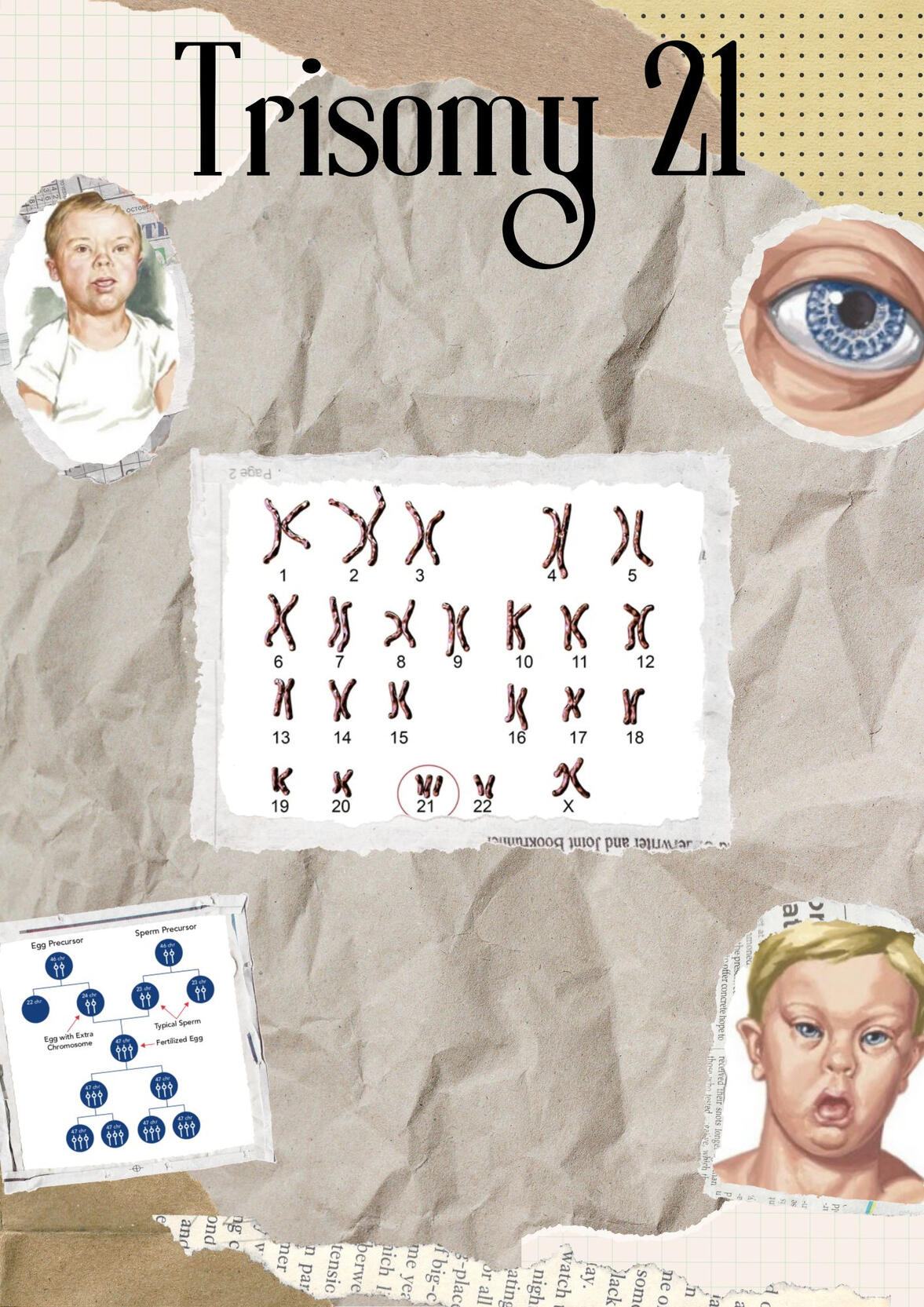
Overview of Trisomy 21 (Down Syndrome) PosterWEEK 6 - DAY 2Trisomy 21, commonly known as Down syndrome, is a genetic condition caused by the presence of an extra 21st chromosome. This lesson involved creating a comprehensive poster to educate classmates about the characteristics, causes, and implications of Trisomy 21. My role included collaborating on the design and content of the poster, as well as presenting and explaining the information to the class.The poster covers the following key points:Definition of Trisomy 21: An overview of Down syndrome as a genetic disorder resulting from the presence of three copies of chromosome 21.Causes: An explanation of how Trisomy 21 occurs, including the mechanisms of nondisjunction during cell division, which leads to an extra chromosome.
Physical Attributes: A description of common physical characteristics associated with Down syndrome, such as:
- Distinctive facial features (e.g., flat facial profile, slanted eyes)
- Short stature and stocky build
- Hypotonia (decreased muscle tone)Cognitive and Developmental Aspects: Information on the range of cognitive abilities and developmental challenges that individuals with Down syndrome may experience.Support and Resources: Highlighting the importance of early intervention, educational support, and community resources for individuals with Trisomy 21 and their families.SUBMITTED ON OCTOBER 15, 2024Learning OutcomesThrough this lesson and the creation of the poster, I learned:1. Genetic Mechanisms: The process by which Trisomy 21 occurs and the implications of chromosomal abnormalities.2. Unique Characteristics: The distinctive physical and developmental traits of individuals with Down syndrome, fostering a deeper appreciation and respect for their diversity.3. Advocacy and Awareness: The importance of promoting understanding and acceptance of individuals with Trisomy 21 within the community.SUBMITTED ON OCTOBER 15, 2024
Overview of Cell TransportWEEK 9 - DAY 2Cell transport is a fundamental biological process that governs how substances move in and out of cells. Understanding the mechanisms of cell transport is crucial for grasping how cells maintain homeostasis, communicate with their environment, and function effectively. This lesson will explore the various types of transport mechanisms, including passive and active transport, and their significance in cellular function.This lesson focuses on the following types of cell transport:Passive Transport: This process does not require energy (ATP) and occurs when substances move across cell membranes along their concentration gradient. Key examples include:Diffusion: The movement of small or nonpolar molecules (e.g., oxygen, carbon dioxide) directly through the lipid bilayer.Facilitated Diffusion: The transport of larger or polar molecules (e.g., glucose, ions) through specific protein channels or carriers in the membrane.Osmosis: The diffusion of water molecules across a selectively permeable membrane.Active Transport: This process requires energy to move substances against their concentration gradient. Key mechanisms include:Primary Active Transport: Direct use of ATP to transport molecules (e.g., sodium-potassium pump).
Secondary Active Transport: Coupled transport where the movement of one molecule drives the transport of another (e.g., glucose-sodium cotransporter).Endocytosis and Exocytosis: Specialized forms of transport involving the engulfing of materials into the cell (endocytosis) or the release of materials from the cell (exocytosis). Examples include:
Phagocytosis: "Cell eating," where large particles are engulfed.
Pinocytosis: "Cell drinking," where fluids and small particles are taken in.
Receptor-Mediated Endocytosis: A more selective process involving specific receptors on the cell surface.Learning OutcomesBy the end of this lesson, you will be able to:1. Differentiate between passive and active transport mechanisms and understand their roles in cellular function.
2. Explain the processes of diffusion, facilitated diffusion, osmosis, and various forms of active transport.
3. Describe the significance of endocytosis and exocytosis in cellular communication and material exchange.
4. Analyze how transport mechanisms contribute to homeostasis and overall cell health.SUBMITTED ON OCTOBER 22, 2024
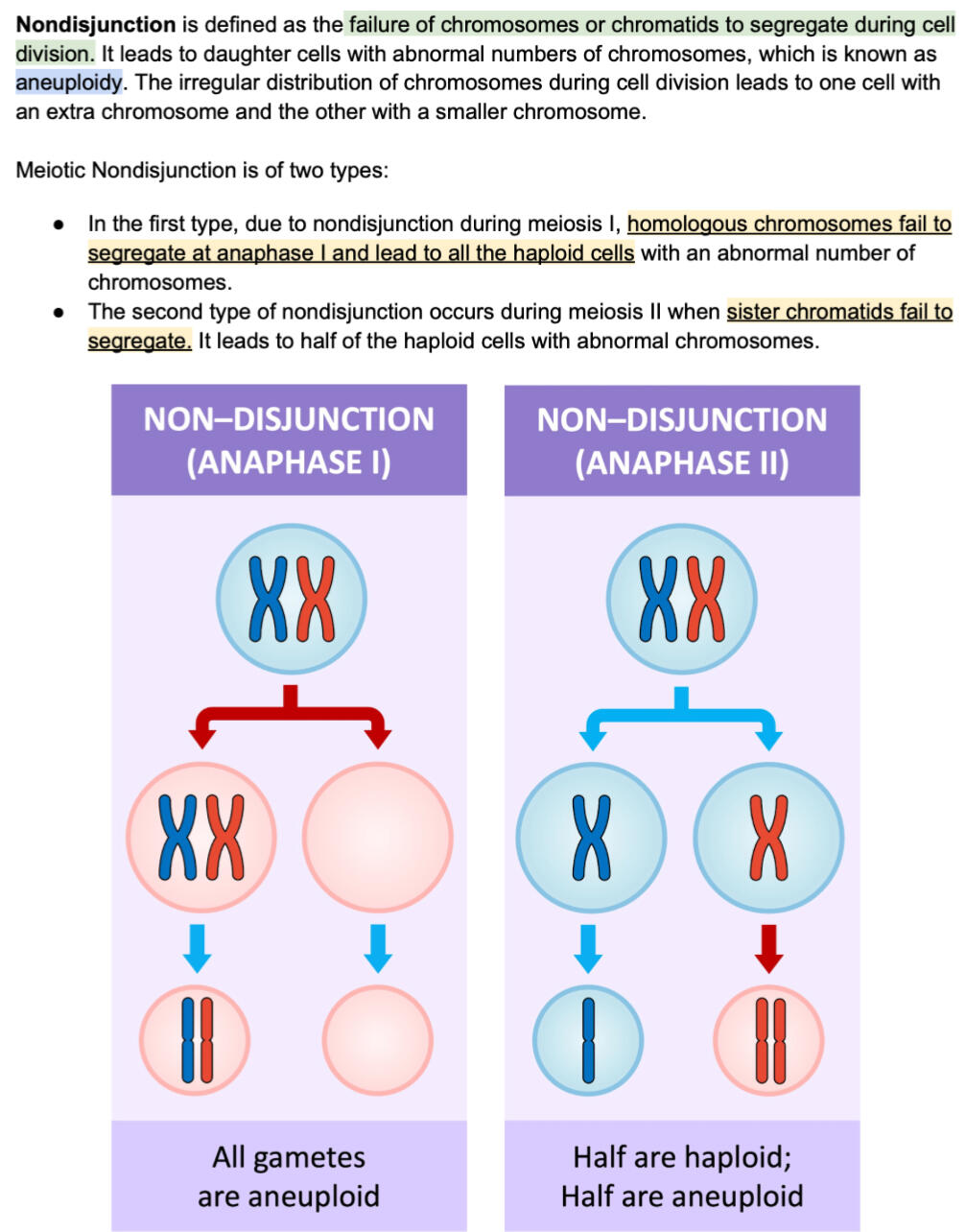
Overview of NondisjunctionNondisjunction is a critical biological process that occurs during cell division, specifically during meiosis and mitosis, leading to the unequal distribution of chromosomes to daughter cells. This phenomenon can result in genetic disorders, including aneuploidy, where cells have an abnormal number of chromosomes. Understanding nondisjunction is essential for grasping its implications in human genetics, developmental biology, and related fields.This lesson covers the following aspects of nondisjunction:Definition: Nondisjunction refers to the failure of homologous chromosomes or sister chromatids to separate properly during cell division. This can occur in meiosis I, meiosis II, or mitosis.Types of Nondisjunction:
Meiosis I Nondisjunction: Homologous chromosomes fail to separate, resulting in gametes with an extra chromosome (n+1) or a missing chromosome (n-1).
Meiosis II Nondisjunction: Sister chromatids fail to separate, leading to similar outcomes in the resulting gametes.
Mitosis Nondisjunction: Can occur in somatic cells, resulting in one daughter cell with an abnormal chromosome number.Consequences: Nondisjunction can lead to various genetic disorders, such as:-Down Syndrome (Trisomy 21): Caused by an extra copy of chromosome 21.- Turner Syndrome (Monosomy X)**: Results from the absence of one X chromosome in females.- Klinefelter Syndrome (XXY): Involves an extra X chromosome in males.- Detection and Implications: Understanding nondisjunction is crucial for genetic counseling, prenatal diagnosis (e.g., amniocentesis, chorionic villus sampling), and implications for inheritance patterns.Learning OutcomesBy the end of this lesson, you will be able to:1. Define nondisjunction and identify when it occurs during cell division.
2. Differentiate between nondisjunction in meiosis I, meiosis II, and mitosis.
3. Explain the consequences of nondisjunction and its role in genetic disorders.
4. Discuss the significance of nondisjunction in genetic counseling and reproductive health.